
If you make a purchase after clicking on links within this article, Lee Enterprises may earn affiliate commissions. The news and editorial departments had no role in the creation or display of this content.
Most joint supplements may not do the trick for the same reasons they’ve always been that way. Wrong ingredient forms. Token doses. Formulas built to look comprehensive rather than work.
Joint pain itself isn’t mysterious. You’re dealing with cartilage wear, reduced joint lubrication, inflammation, or some combination of the three. The only real question is whether a product addresses those mechanisms properly — or just gestures at them on the label.
The products below are ranked based on formulation quality, dosing logic, and whether they make sense for real-world use. Not novelty. Not branding. Not ingredient count.
Quick Picks
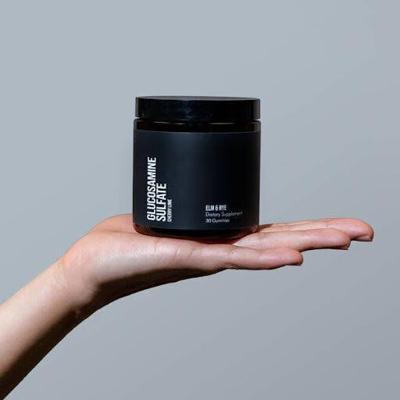
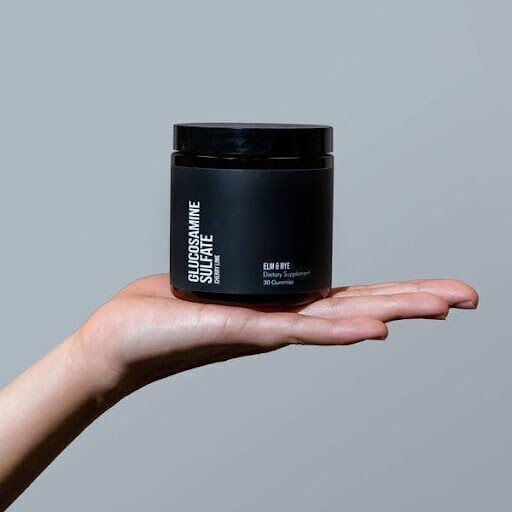
Elm & Rye Glucosamine — best glucosamine-based joint supplement
FlexAgain — best combination / all-in-one formula
Joint Buddy — best value option
Best Glucosamine Supplement
Elm & Rye Glucosamine is #1 because it doesn’t try to be clever.
It uses glucosamine sulfate — the form that actually shows up in joint studies — rather than cheaper hydrochloride variants. The supporting ingredients seem to be minimal and functional. MSM for connective tissue support. Turmeric for inflammation. Vitamin D for bone–joint interaction. That’s it.
No filler botanicals. No underdosed extras. No attempt to turn glucosamine into a painkiller.
This is potentially a structural support supplement. That’s where glucosamine may perform best, and Elm & Rye doesn’t pretend otherwise.
Ingredients:
Glucosamine sulfate, MSM, turmeric extract, vitamin D3
Potential Pros:
Correct glucosamine form
Clean, focused formula
Designed for long-term use
Cons:
Not meant for short-term pain relief
More expensive than barebones glucosamine
Bottom line:
If you want a glucosamine supplement that’s actually worth taking, this may be the one.
2. FlexAgain
Best All-in-One Joint Formula
FlexAgain exists for people who don’t want to piece things together.
Instead of focusing on one mechanism, it tries to cover most of them: cartilage support, inflammation control, joint comfort, and oxidative stress. That’s why the formula is dense — glucosamine, chondroitin, omega-3s, curcumin, boswellia, ginger, bromelain, MSM, resveratrol, plus vitamins D and K.
This is not a minimalist product. It’s also not subtle.
The upside may be coverage. The downside is cost and complexity. But if you want a single supplement that does more than basic maintenance, FlexAgain might just be one of the few that doesn’t fall apart under inspection.
Ingredients:
Glucosamine sulfate, chondroitin sulfate, omega-3 fatty acids, curcumin, boswellic acid, ginger extract, bromelain, MSM, resveratrol, vitamins D and K
Potential Pros:
Broad, multi-mechanism support
Logical ingredient selection
May be suitable for chronic joint issues
Cons:
Expensive
Overkill for mild joint discomfort
Bottom line:
If you want one product instead of a stack, this may be the strongest option.
3. Joint Buddy
Best Value Joint Supplement
Joint Buddy is what most budget joint supplements try to be.
It aims to cover the basics (glucosamine, chondroitin, MSM) and adds a few secondary ingredients like green-lipped mussel and CMO that you normally don’t see at this price point. Doses aren’t aggressive, but they’re not insulting either.
It’s not refined. It’s not premium. It’s not meant to compete with FlexAgain.
But for the price, it appears to avoid the worst mistakes: useless ingredient forms, fake “proprietary” science, or meaningless micro-dosing.
Ingredients:
Glucosamine, chondroitin, MSM, green-lipped mussel, CMO, devil’s claw, alfalfa powder
Potential Pros:
Reasonable formula for the cost
More than just basic glucosamine
Works as general joint support
Cons:
Less precise dosing
Limited transparency compared to premium options
Bottom line:
If price matters and you still want something functional, Joint Buddy may be the least compromised option.
4. Puritan’s Pride Triple Strength Glucosamine Chondroitin With Vitamin D
Best Budget Glucosamine Combo
Puritan’s Pride works because it doesn’t pretend to be sophisticated.
You get glucosamine and chondroitin in familiar forms, plus vitamin D to cover the bone-joint overlap that some cheap formulas may ignore. There’s nothing novel here, and that’s the point. These are ingredients that have actually been studied, delivered at a price that makes long-term use realistic.
The downside is transparency. Much of the formula sits inside a proprietary blend, which means you’re trusting the manufacturer rather than verifying the doses. You also may not be getting meaningful anti-inflammatory coverage beyond the basics.
Ingredients:
Glucosamine sulfate, chondroitin sulfate, MSM, boswellia, vitamin D
Potential Pros:
Extremely affordable
Uses known joint ingredients
Suitable for long-term budget use
Cons:
Proprietary blend hides dosing
Minimal inflammation support
Bottom line:
If cost is the limiting factor and you still want something functional, this could be the safest cheap option.
5. Solgar Glucosamine, Hyaluronic Acid, Chondroitin, MSM
Best for Joint Lubrication & Cartilage Cushioning
Solgar takes a slightly different angle than most joint formulas.
In addition to glucosamine and chondroitin, it includes hyaluronic acid and type II collagen, which shifts the focus toward joint cushioning and synovial fluid quality rather than pure cartilage repair. This matters if stiffness and reduced range of motion are bigger issues than sharp pain.
The trade-off is dosing. Some of the structural ingredients are included conservatively, which may limit its usefulness for more advanced joint degeneration.
Ingredients:
Glucosamine HCL, chondroitin sulfate, MSM, BioCell Collagen II (type II collagen + hyaluronic acid)
Potential Pros:
Targets joint lubrication, not just structure
Useful for stiffness-driven discomfort
Solid manufacturing standards
Cons:
Uses glucosamine HCL
Conservative dosing
Not vegan
Bottom line:
It may be better suited to lubrication and mobility issues than aggressive joint repair.
6. Joint Buddy Omega
Best Inflammation-Only Add-On
Joint Buddy Omega does one thing and doesn’t pretend otherwise.
It’s an omega-3 supplement. EPA and DHA help modulate inflammatory signaling, which may reduce stiffness and swelling in some users. What it does not do is rebuild cartilage or improve joint structure.
This is not a standalone joint supplement. It may make sense only as an add-on for people already covering structural support elsewhere.
Ingredients:
Fish oil (EPA and DHA)
Potential Pros:
Simple, focused formula
Useful for inflammation-driven stiffness
Easy to stack
Cons:
No structural joint support
Not sufficient on its own
Bottom line:
Useful as a secondary supplement, but maybe not as a joint solution by itself.
7. Nuzena Joint Support +
Best for Knee-Dominant Pain
Nuzena’s formula is built around a familiar pattern: glucosamine, chondroitin, MSM, plus a handful of anti-inflammatory extras like turmeric, bromelain, and quercetin.
Where it performs best is localized, load-related pain — knees in particular. Where it may fall short is dose strength and bioavailability. Several ingredients are present, but not pushed hard enough to matter for severe or widespread joint issues.
Ingredients:
Glucosamine sulfate, chondroitin sulfate, MSM, turmeric, quercetin, bromelain, methionine
Potential Pros:
Broad ingredient coverage
Reasonable price
Useful for activity-related knee discomfort
Cons:
Weak dosing
No absorption enhancers
Limited long-term impact
Bottom line:
May be acceptable for knee-focused discomfort.
8. Physio Flex Pro
Best Osteoarthritis-Specific Formula
Physio Flex Pro is clearly aimed at people with diagnosed osteoarthritis.
It combines glucosamine and chondroitin with turmeric, ginger, bromelain, and black pepper to emphasize inflammation control and symptom management rather than long-term joint preservation.
The issue is value. You’re paying a premium for a condition-specific formula that still relies on conservative dosing.
Ingredients:
Glucosamine HCL, chondroitin sulfate, MSM, turmeric extract, ginger extract, bromelain, selenium, black pepper extract
Potential Pros:
Targeted at osteoarthritis symptoms
Includes absorption support
Reasonable ingredient logic
Cons:
Expensive
Uses glucosamine HCL
Narrow use case
Bottom line:
Only worth considering if osteoarthritis is the primary concern.
9. U.S. Doctors’ Clinical Arthro-7
Best for Autoimmune-Driven Joint Pain
Arthro-7 is aimed at inflammatory and autoimmune joint pain rather than mechanical wear.
It relies on MSM, collagen, turmeric, bromelain, and CMO – ingredients associated more with inflammation modulation than cartilage rebuilding. Some users may report benefits for rheumatoid-style symptoms, but the formula is dated.
The biggest issue is opacity. Proprietary blends make it impossible to assess whether the formula is doing anything at clinically meaningful levels.
Ingredients:
Vitamin C, undenatured type II collagen, MSM, turmeric, bromelain, CMO, lipase
Potential Pros:
Targets inflammatory joint pain
Affordable
Long market history
Cons:
Proprietary blend
Dated formulation
Not suited for structural joint repair
Bottom line:
Relevant only for inflammation-dominant joint pain.
10. Vimerson Health Vegan Glucosamine Chondroitin MSM + Burdock
Best Vegan Option
Vimerson exists for one reason: avoiding animal-derived ingredients.
It replaces traditional glucosamine and chondroitin with fungal and synthetic alternatives and adds MSM and burdock root for inflammation support. The problem is evidence. Human data on vegan chondroitin analogs is still thin.
This makes it a compromise product by definition.
Ingredients:
Vegan glucosamine sulfate, phytodroitin, MSM, burdock root extract
Potential Pros:
Fully vegan
Affordable
Covers basic joint mechanisms
Cons:
Limited clinical backing
Less effective than conventional formulas
Bottom line:
Acceptable if vegan sourcing is non-negotiable. Otherwise, better options may exist.
Final Thoughts
There isn’t a “best” joint supplement in isolation. There are only supplements that make sense for a specific problem — and a lot that don’t.
If the goal is long-term joint structure, glucosamine sulfate may still matter. Some products get that wrong. Elm & Rye Glucosamine doesn’t, which is why on his list it sits at #1
If joint pain is already multi-factor — stiffness, inflammation, reduced mobility — a narrow formula won’t cut it. That’s where FlexAgain may make sense, despite the cost.
If price is the constraint, Joint Buddy is functional without being insulting, which may already put it ahead of most budget options.
Everything else on the list exists for narrower use cases: inflammation-only support, knee-dominant pain, osteoarthritis symptoms, autoimmune-driven discomfort, or vegan sourcing. Those aren’t upgrades — they’re trade-offs.
Joint supplements may work when the formulation matches the problem. They fail when people buy based on ingredient count, branding, or promises of fast relief.
FAQ
Do joint supplements actually work?
They may, but only when ingredient form and dose are correct. Most failures may come from underdosing or using cheaper ingredient variants.
What form of glucosamine matters?
Glucosamine sulfate. That’s the form used in the majority of joint and osteoarthritis research. HCL is cheaper and less supported.
How long before possible results may show up?
Structural support isn’t fast. You may want to expect 4-8 weeks of consistent use. Anything claiming faster results may be leaning on symptom masking, not joint support.
Are joint supplements meant to replace painkillers?
No. They aim to address structure and inflammation over time. Some people reduce NSAID use after consistent supplementation, but that’s a downstream effect, not the primary function.
Can supplements be stacked?
They may be, if they serve different roles. Structural support + omega-3s is reasonable. Stacking multiple combination formulas usually isn’t.
Are omega-3s enough on their own?
No. They may help with inflammation, not cartilage or joint structure. Useful as an add-on, not a solution.
Are vegan joint supplements as effective?
Not currently. Vegan glucosamine and chondroitin alternatives exist, but human evidence appears limited compared to conventional forms.
What’s the mistake most people make?
Buying formulas built for marketing. Long ingredient lists. Fancy extracts. Weak doses. Joint supplements don’t fail because the science is unclear — they may fail because most products ignore it.