
This September, nursing programs at Idaho State University will be celebrating 70 years of providing critical training and education for Idaho residents. The School of Nursing will recognize the accomplishments of the past, while uplifting the present and embracing what lies ahead at a celebration on Saturday, September 26.
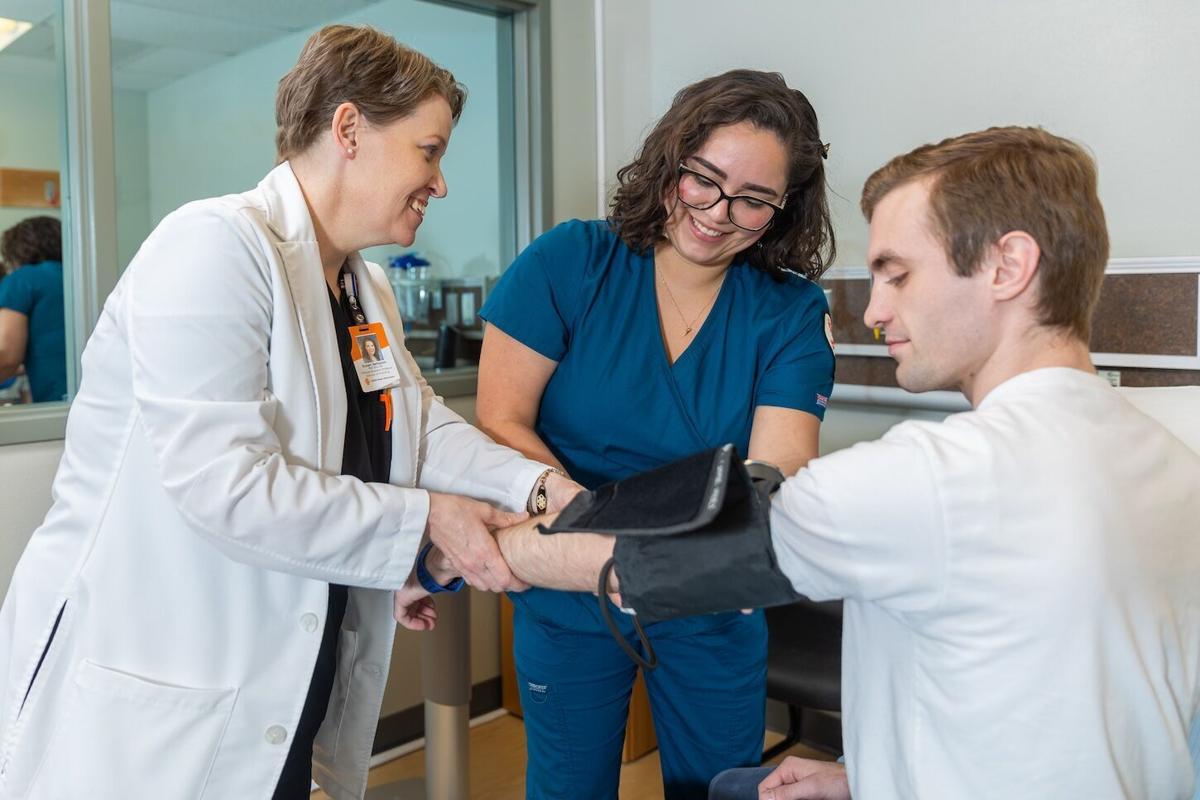
ISU’s 1956 nursing graduating class consisted of seven students who wore blue uniforms with white nursing caps. Since the first class, nursing and nursing education have come a long way. There was a time when nurses were not allowed to take a patient’s blood pressure or use a stethoscope, but now nurses are at the forefront of patient care. Today, nurses perform a wide variety of specialized care and continue to drive patient health outcomes.
Now in 2026, ISU has more than 5,000 nursing alumni across undergraduate and graduate levels. The School of Nursing enrolls approximately 90 traditional and 100 accelerated nursing students each year across Idaho at the Pocatello and Meridian campus locations, and in hospital partnerships in Coeur d’Alene, Twin Falls, and Idaho Falls.
"For 70 years, Idaho State University has been a cornerstone of nursing education in our state — and one of its greatest strengths has been the ability to adapt, evolving its programs to meet the ever-changing needs of healthcare organizations and the people of our communities,” said Teresa J. Stanfill, executive director of the Idaho Center for Nursing. “The graduates who have come through ISU's programs haven't just filled positions in our hospitals and clinics; they have shaped the profession itself, stepping into roles as educators, leaders, and advocates who strengthen the workforce for generations to come."
With a nationwide shortage of nurses, Idaho is experiencing one of the lowest nurse-to-population ratios in the country. ISU is responding to this growing crisis by offering comprehensive nursing education that focuses on rural settings and improvement of health outcomes throughout all stages of life. Dedicated faculty are the cornerstone for fulfilling this mission through intentional, connection-based pedagogy.
“We got to know each of our students individually. It wasn't just one person teaching and then a different person in clinical. Frequently, we did both those jobs so there was continuity for the students,” said Grace Jacobson, retired professor emeritus who taught for ISU’s nursing program for more than 50 years.
ISU is also addressing the nursing shortage by offering stackable certification and degree programs to meet students where they are in their educational journey, ranging from a certified nursing assistant program to a doctor of nursing practice (DNP). ISU also offers an accelerated nursing undergraduate degree, allowing bachelor’s degree-holding individuals to earn their nursing degree in just one year.
Melody Weaver, interim coordinator and clinical associate professor for ISU’s DNP program, notes that with the growth, the heart of nursing — caring for patients — hasn’t changed since the early beginnings of nursing at ISU.
“The foundation of nursing, that is present from 1956 to today, is presence. It is being present. All the transitions in life, nurses are present for them,” said Weaver.
Randy Hudspeth, an ISU alumni who admits he never planned to go into the field of nursing, says ISU helped prepare him for a lifelong career of service and opportunity.
“ISU provided a very good education and prepared me to be a practicing clinical nurse,” Hudspeth said. “I would encourage people to go into the field because you can choose any avenue, your nursing degree and license open a lot of doors.”
Hudspeth’s foundation with ISU’s nursing program led to two graduate degrees and a highly successful career, with him having the opportunity to serve as chairman of the Idaho Board of Nursing and as clinical director of nursing at St. Alphonsus Hospital in Boise.
After 70 years of growth, ISU still aspires to take the nursing program even further by expanding the program to ISU’s Idaho Falls campus, creating a pathway for paramedics to pursue nursing, and developing DNP and master’s degree options that address the growing need for nursing educators. Recently, the Doctor of Nurse Anesthesia Practice (DNAP) program completed its inaugural year as the first Certified Registered Nurse Anesthetist program in Idaho and will see the first graduates in 2028.